
How to Plan an Unforgettable Club Night
A club night lives or dies on energy, and energy is something you design on purpose. To plan a club night that people talk about for weeks, you start with a clear theme and crowd, build a set that climbs through the evening, back it with sound and lighting that fill the room, and promote it early enough to pack the floor. Everything below walks you through each of those pieces in order.
Whether you are a venue manager booking a resident night, a host throwing a milestone party, or a promoter chasing a full room, the fundamentals are the same. Get the foundation right and the night runs itself.
How to Plan a Club Night: Start With Theme and Crowd
The first move in how to plan a club night is deciding who you want on the floor and why they will come. A theme is a promise: open format, Arabic-to-international, retro, techno, a birthday takeover. That promise shapes the music, the dress code, the pricing and the look of the room. Pick it before anything else.
Your crowd follows your theme. A university-age EDM night and a 30-something open-format night want different hours, different drinks and very different playlists. Be honest about who your real audience is, then design for them instead of trying to please everyone.
A few questions to pin down early:
- Who is this night for, and what do they already listen to?
- What is the one feeling you want people to leave with?
- Does your venue and location match that crowd?
- What hours fit their habits, and when does the floor need to peak?
In Lebanon, the sweet spot is often a blend. A room that moves from Arabic hits into international tracks keeps both tastes dancing, which is a craft in itself. Those transition techniques apply just as well to a club floor as they do to a wedding.
How Do You Curate Sets That Build Energy Through the Night?
You curate energy by treating the night as an arc, not a flat playlist. Think in four phases: a warm open, a steady build, a peak, and a smart landing. Each phase has a job. The open sets mood and invites early arrivals in, the build raises tempo and recognition, the peak delivers the biggest moments, and the landing sends people home happy instead of exhausted.
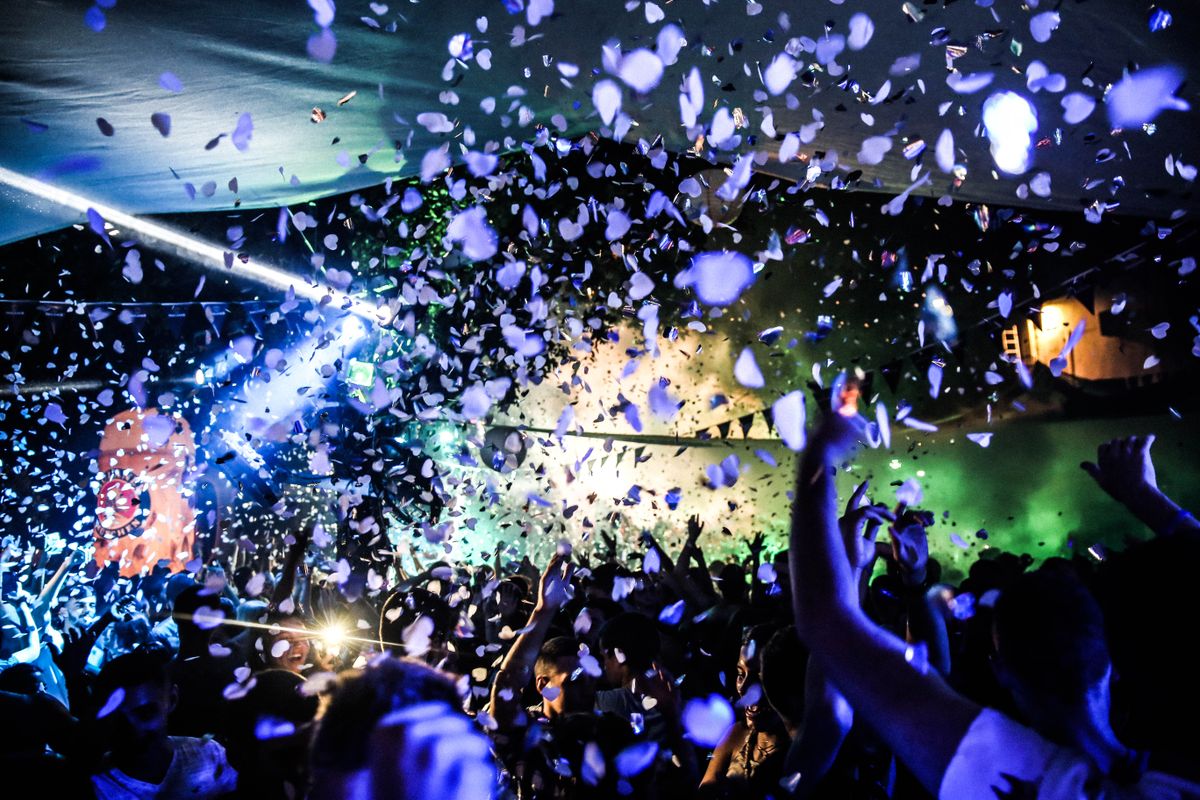
The mistake most first-time planners make is peaking too soon. If the biggest drop lands at 11pm, the room has nowhere to go for the next two hours. Map your anchor moments against the clock instead. A rough timeline for a five-hour night looks like this:
- First hour: lower tempo, familiar songs, room to talk and settle.
- Second hour: tempo climbs, the floor starts filling.
- Peak window: your headline energy, the biggest tracks, any special effects.
- Final stretch: a controlled come-down with sing-along favorites.
Save your standout production moments for the peak. A cold-spark volcano or a wall of dry ice behind a headline drop turns a good set into a memory, and it gives guests the photo they will post. The same pacing and song-order logic that builds a great wedding playlist carries straight over to a club night.
Sound and Lighting That Fill the Room
Great sound and lighting do not just support the music, they are half the experience. A thin PA in a big room kills a set before it starts, and flat overhead lighting makes even a full floor feel empty. You want sound that reaches every corner evenly and lighting that moves with the music and gives the space depth.
Volume matters, and so does control. NIOSH sets its recommended noise exposure limit at 85 A-weighted decibels averaged over an eight-hour workday, and notes that people exposed at or above that level risk significant hearing loss over time (CDC/NIOSH, 2024). A club night runs louder than a workplace for short bursts, but the lesson holds: a skilled operator pushes impact without turning the room into a wall of pain, and protects both the crowd and the mix.
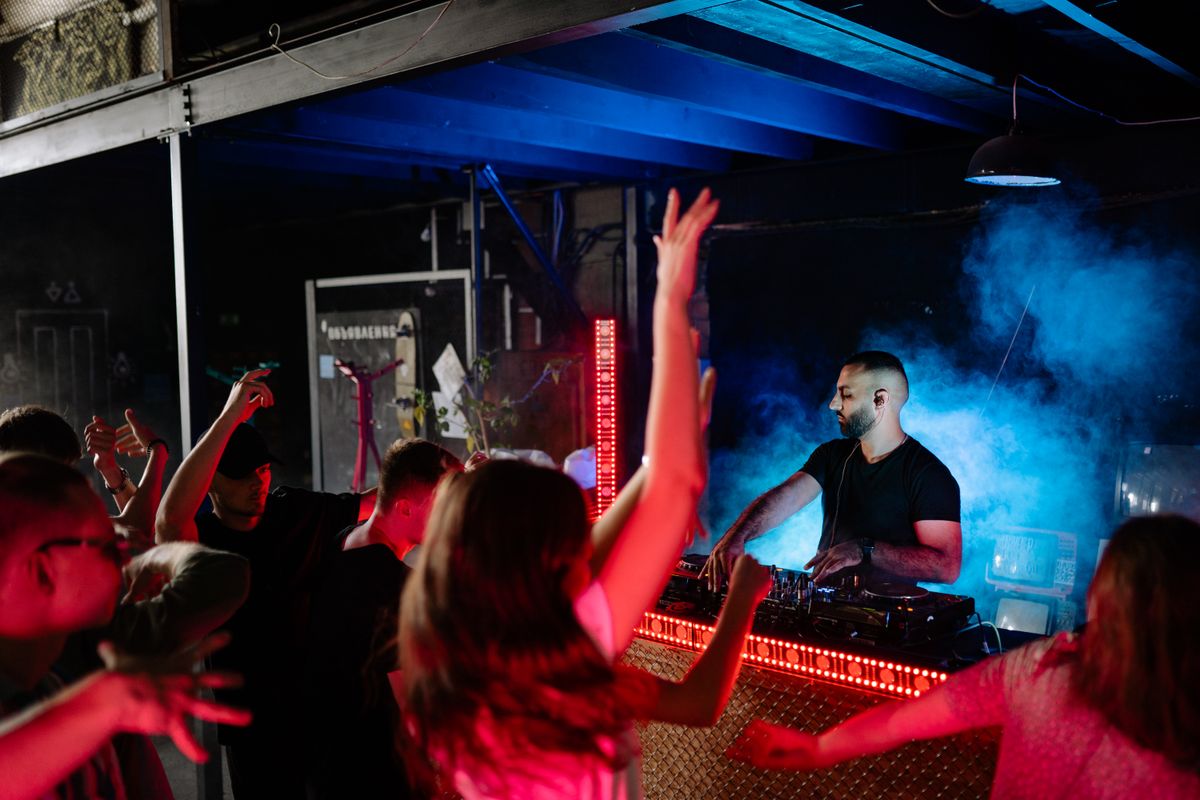
On the lighting side, plan for layers: wash lighting to color the room, moving heads for the floor, and effects reserved for peak moments. Uplighting alone can completely change how a venue feels, warming a cold space or giving a plain hall a sense of occasion. If you are matching a room to a mood, our uplighting guide to transform your venue shows how color and placement do the heavy lifting.
A quick production checklist:
- A PA sized for the room, not the budget line.
- Even coverage, so the back of the floor hears what the front does.
- Layered lighting: wash, movement, and reserved effects.
- Effects like dry ice, fireworks or cold-spark volcanos timed to peak moments.
- One point of contact who owns how the night sounds and looks.
That last point is where a full-production DJ earns their keep. DJ JAY-P OFFICIAL brings sound, lighting, stages and effects as one package, so you are not stitching together three vendors who have never worked the same room.
Working With a DJ for Tight Transitions
A cohesive night comes from one person reading the room and controlling every lever in real time. Transitions are where amateurs get exposed: a dead gap between songs, a jarring tempo jump, a lighting cue that lands a beat late. A seasoned DJ beat-matches, blends keys, and rides the crowd's energy so the music never stops breathing.
The real advantage shows up when the same person controls the lights and effects. When a DJ triggers a cold-spark volcano on the exact bar the track drops, the whole room feels it at once. Split that across a DJ and a separate lighting tech and you lose that split-second sync that makes a moment electric.
Brief your DJ early and give them context, not a rigid script. Tell them the crowd, the vibe, the must-play songs and the no-go list, then trust them to read the floor on the night. For a club-style floor that needs continuous momentum, a DJ almost always beats a live band, because the music never has to stop for a set change.
How Do You Promote a Club Night to Pack the Venue?
You pack a venue by starting your promotion early and leaning hard into social media, where your crowd already decides how to spend their nights. Social platforms are now the biggest driver of event discovery, especially for younger audiences: 64% of Gen Z and 61% of Millennials use them to find things to do (EventVesta, 2025). If your night is not showing up in their feed, it barely exists.
Build a simple runway over three to four weeks:
- Three to four weeks out: announce the date, theme and lineup with a strong visual.
- Two weeks out: short video teasers, past-night clips, DJ shout-outs.
- Final week: daily stories, guest-list links, countdown posts.
- Day of: a last reminder with doors, set times and the address.
Give people an easy way to commit. A WhatsApp link for guest list or table bookings turns interest into a confirmed head count, and it lets you message attendees directly before doors. Short vertical video does the heaviest lifting, so film your best past moments and let the energy sell the next one.
Planning a private celebration instead of a public night? The same promotion logic scales down neatly for a guest-list crowd, from a milestone birthday to an engagement party.
Bring It All Together
The strongest club nights are the ones where every piece points the same direction: a theme that attracts the right crowd, a set that climbs, production that fills the room, and promotion that gets bodies through the door. Lock those four and the night carries its own momentum.
Your next step is simple. Sketch your theme and target crowd on one page, then map your energy arc against the clock before you book anything else. Once you know the night you want, message DJ JAY-P OFFICIAL on WhatsApp to line up the sound, lighting and effects that make it real.
Frequently asked questions
How far in advance should I plan a club night?
Give yourself four to six weeks minimum. That window lets you lock the venue, confirm the DJ and production, build a guest list and run a full promotion push before the date.
What makes a club night actually feel memorable?
A clear theme, a set that builds energy through the night, and sound and lighting that fill the room. When one person controls the music, lights and effects, transitions feel tight and the floor stays full.
How loud should the music be at a club night?
Loud enough to feel, not so loud it hurts. NIOSH flags 85 dBA over eight hours as a hearing-risk threshold, so a good DJ and sound setup balance impact with comfort across the room.
Do I need special effects like cold-spark volcanos or dry ice?
You do not need them, but they create standout moments and photos. Save big effects for the peak of the night, like a headline drop or a key entrance, so they land with maximum impact.
Can one person handle both the music and the lighting?
Yes. Booking a DJ who also supplies sound, lighting and effects means one person reads the room and syncs every element live, which keeps the night cohesive and the energy consistent.