
Building the Ultimate Wedding Playlist
The best wedding playlist tips start with one idea: you are not making a single list, you are designing the emotional arc of a whole night. Think in three zones (the ceremony, the dinner, the party), pick the handful of songs that carry real meaning, and leave room for a DJ to read the crowd and adjust in the moment. Do that and the floor stays full from your entrance to the last song.
Most couples open a music app, start a shared playlist, and quickly feel buried. You have a song for your first dance, a few you love in the car, and a vague worry that your aunt and your university friends will never dance to the same thing. That worry is normal, and it is exactly what good planning solves.
The wedding playlist tips that start with structure
The first of our wedding playlist tips is the one that saves every other decision: build your music around the three parts of the day. Every strong wedding runs on three distinct moods, and your music should match each one.
Ceremony and arrival. This stretch is about atmosphere. You want something that fills the space without competing with the moment. In a Lebanese wedding the zaffe sits right here, turning the entrance into the first peak of the night. The music needs to carry drums, voices and energy while still letting everyone feel the emotion of the walk in. If you are planning this moment, our guide on how to plan the perfect zaffe entrance walks through the flow in detail.
Dinner. The goal here is easy conversation. Keep the volume where guests can talk across a table, and lean on warm, familiar background music: smooth Arabic classics, acoustic covers, light international tracks. This is also when you breathe between the big moments, so resist the urge to peak too early.
Party. Now you open up. This is where the floor fills, the tempo climbs, and the Arabic-to-international mixing really earns its place. The energy should build in waves rather than one flat blast of loud songs, so the room has somewhere to go as the night gets later.
Mix crowd-pleasers with personal favorites
The playlist that works is a balance. Lean too far toward your personal taste and half the room sits down. Lean too far toward safe wedding staples and the night feels like someone else's party.
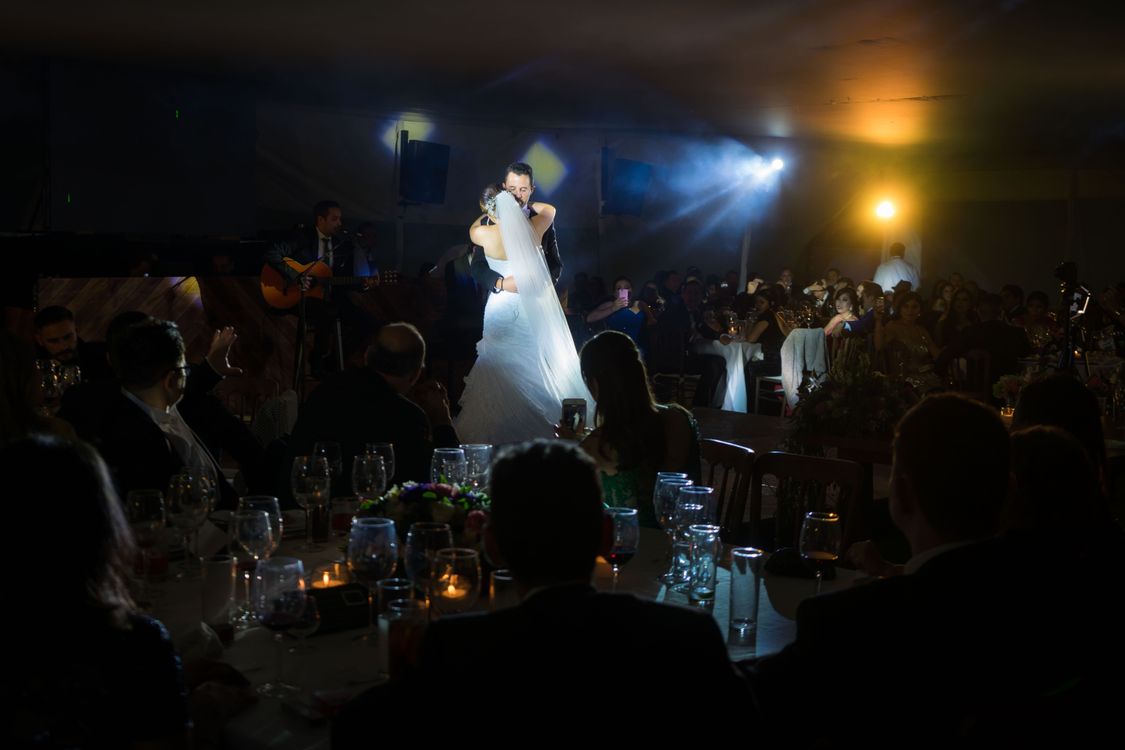
A simple ratio helps: for every song that is purely yours, plan two or three that you know will pull people up. Your personal favorites belong in the moments that are about you, like the first dance or the song playing when you cut the cake. The crowd-pleasers belong in the open party stretch where the job is to keep bodies moving.
A few ideas for song moments that almost always land:
- A familiar Arabic hit early in the party to signal that dancing has started
- An international throwback that your parents' generation will recognize and claim
- One high-energy current track every few songs to keep the younger crowd going
- A slow, meaningful song mid-party so the floor can reset before the final push
If you want help pinning down the single most personal choice, spend real time on the first dance song, since it is the one track the whole room will watch you move to.
Read the room and time your genre switches
Here is where a playlist stops being a document and becomes a performance. A list cannot see that the floor just emptied, or that a surprise table of cousins wants more dabke. A person can.
This is why personality and crowd-reading matter so much in a DJ. In The Knot Worldwide's 2026 Real Weddings Study, personality came up as a top deciding factor for 53% of couples hiring a DJ, ahead of raw technical skill. Couples instinctively understand that someone who can feel the room is worth more than a perfect but rigid setlist.
Good genre switching follows the energy, not the clock. A smooth transition from an Arabic anthem into a international club track keeps everyone who was already dancing while pulling in the next wave. A clumsy jump from a slow ballad straight into heavy party music clears the floor. The art is in the bridge between songs, matching tempo and mood so no one feels the gear change.
A few timing principles that hold up night after night:
- Never follow a floor-filler with an untested personal pick. Earn the room first.
- Watch the drinks and the clock. Energy peaks later than most couples expect.
- When something is working, ride it. Do not cut a great moment short for the schedule.
- Save one or two guaranteed anthems for the final stretch, not the middle.
Make a must-have and a do-not-play list
These two short lists do more for your night than a thousand-song mega playlist ever will.
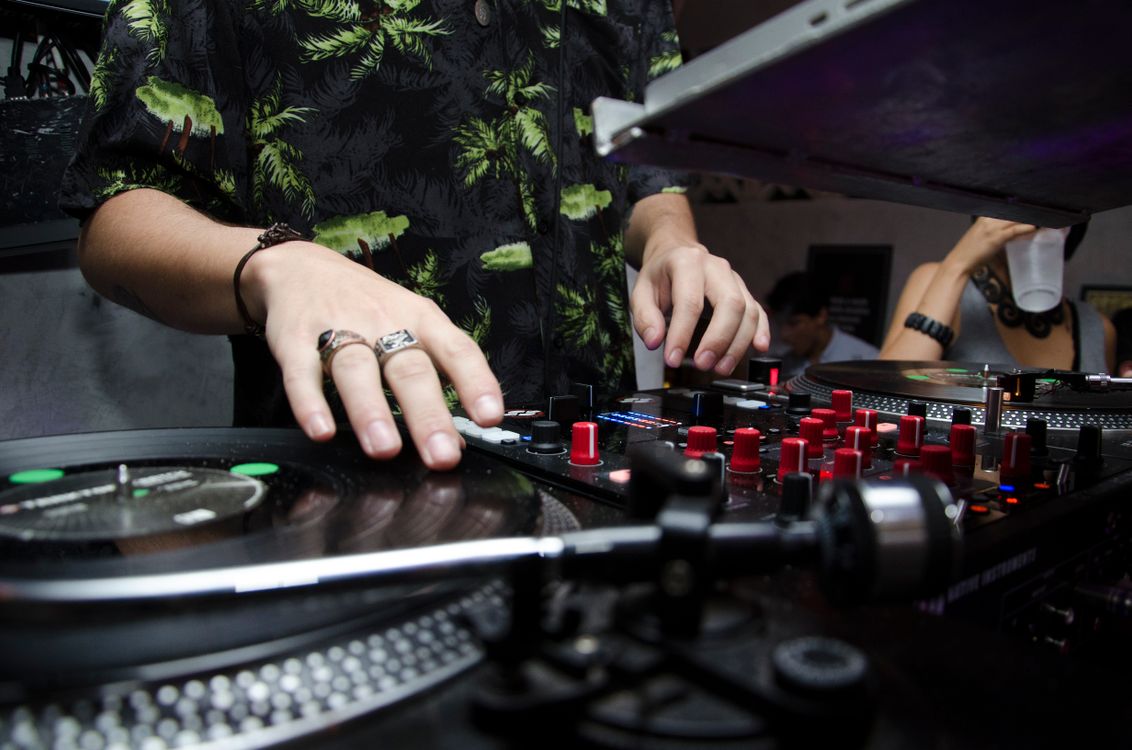
Your must-have list is the handful of songs that genuinely must be played: the entrance, the first dance, the parent dances, one or two family favorites, and the tracks tied to specific moments like the cake or the bouquet. Keep it to roughly 20 to 30 songs. Any more and you are quietly forcing the DJ to ignore the room to fit them all in.
Your do-not-play list is just as important, and often shorter. It might be an ex's song, an overplayed track you cannot stand, a genre that does not fit your crowd, or anything tied to a memory you would rather not relive on your wedding night. A single clear do-not-play list prevents the one song that makes you wince.
Write both lists down and hand them over together. Vague instructions like "nothing too old" or "keep it classy" leave too much open. Specific titles leave nothing to chance on the night.
Collaborate with your DJ for a smooth flow
The final piece ties everything together. Your playlist is the raw material. Your DJ is the one who shapes it into a flow, and the handoff between you two decides how smooth the night feels.
Share your must-have and do-not-play lists a few weeks ahead, then confirm the key moments and entrance music in a planning call. Talk through the shape of the night: when the zaffe lands, how long dinner runs, when you want the party to truly open up. The more context your DJ has about your crowd, your families and your culture, the better they can read and respond in real time.
This is the part of the night where a complete production approach pays off. With DJ JAY-P OFFICIAL, one person handles how the night both sounds and looks, from the Arabic-to-international mix on the floor to the lighting and effects that mark your biggest moments, so the music and the atmosphere move together instead of fighting each other. If you are still choosing a vendor, our list of questions to ask before booking a wedding DJ covers what to confirm about planning and flexibility before you sign.
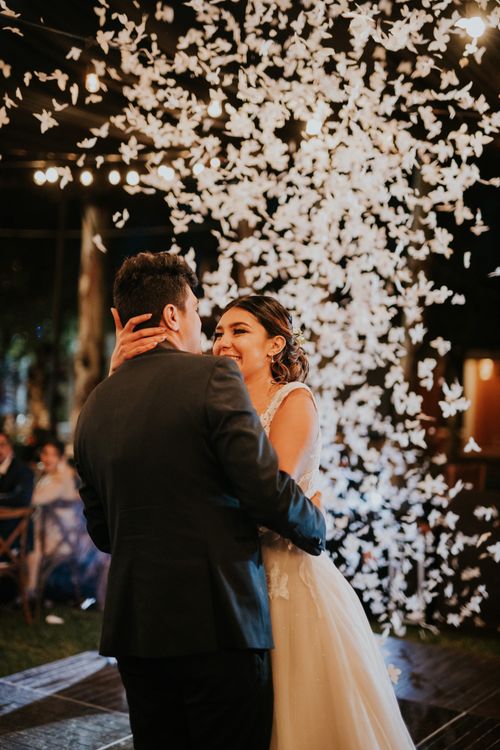
A great wedding playlist is less about owning the perfect songs and more about building a night that breathes: calm where it should be calm, loud where it should be loud, and personal in all the moments that matter. Start your two lists this week, the must-haves and the do-not-plays, and bring them to a conversation with your DJ. When you are ready to map out the full flow of your night, reach out over WhatsApp and we will build it together.
Frequently asked questions
How many songs do I actually need to pick for my wedding?
You do not need to pick every song. Choose the key moments (entrance, first dance, parent dances, zaffe), give 20 to 30 must-plays and a short do-not-play list, then let your DJ fill the gaps by reading the room.
Should I give my DJ an exact minute-by-minute playlist?
No. Give direction, not a rigid script. A strict playlist stops your DJ from reacting when a song empties the floor or a crowd wants more of something that is working.
When should I share my playlist with my wedding DJ?
Share your must-play and do-not-play lists a few weeks before the wedding, then confirm the key moments and entrance music in a final planning call so nothing is a surprise on the night.
How do I keep older guests and younger guests dancing?
Alternate energy and era, and lean on Arabic-to-international transitions. A familiar Arabic hit pulls the whole room in, then a current track keeps the younger crowd going without clearing the floor.